
Social Media · February 18, 2023 · 6 min read
5 Tips for Managing Social Media Marketing Analytics
Five practical ways to identify, analyse and evaluate your social media analytics — so your posting is tied to real business goals, not vanity numbers.
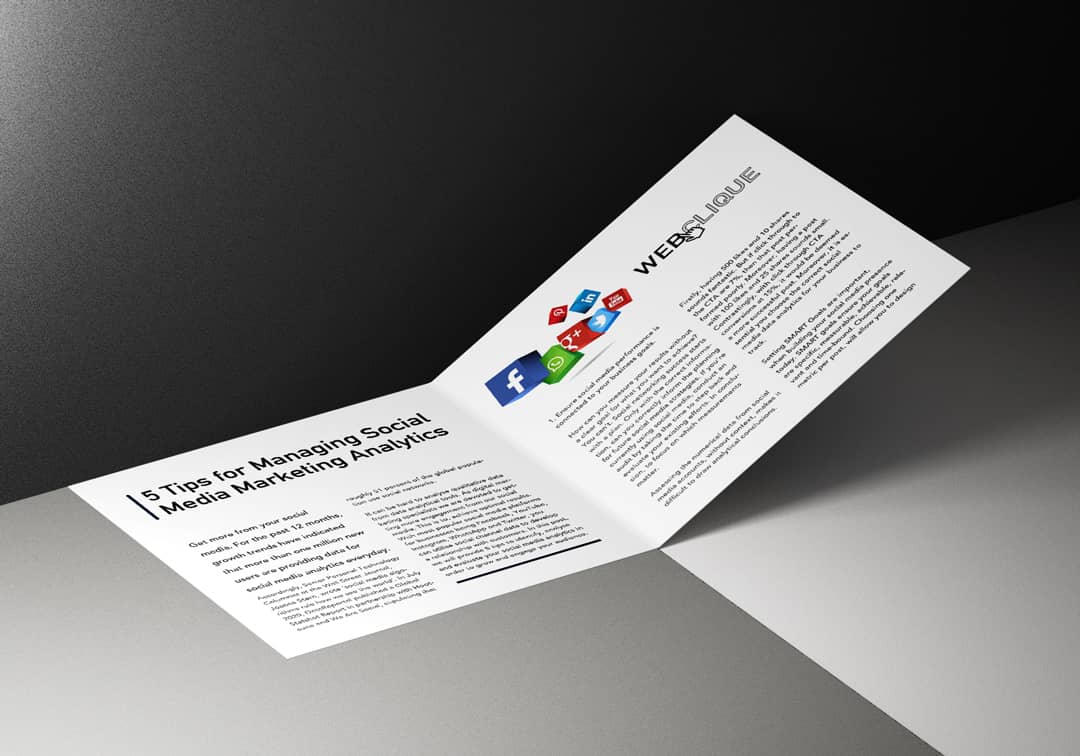
Get more from social media analytics.
In the past 12 months, growth trends have indicated that more than one million new users are providing data for social media analytics every day. Accordingly, the Senior Personal Technology Columnist at the Wall Street Journal, Joanna Stern, wrote “social media algorithms rule how we see the world”.
In July 2020, DataReportal published a Global Statshot Report in partnership with Hootsuite and We Are Social, stipulating that roughly 51 percent of the global population use social networks.
It can be hard to analyse qualitative data from analytical tools. As digital marketing specialists, we are devoted to getting more engagement from our social media and achieving optimal results. With the most popular social platforms for business being Facebook, YouTube, Instagram, WhatsApp and Twitter, businesses can use social channel data to develop their relationship with customers.
In this post, we’ll provide five tips to identify, analyse and evaluate your social media analytics — so you can grow and engage your audience.





1. Connect social performance to your business goals
How can you measure results without a clear goal for what you want to achieve?
Assessing the numerical data from social media accounts without context makes it difficult to draw analytical conclusions. Having 500 likes and 10 shares sounds fantastic — but if clicks from the call to action are 7%, that post performed poorly. Conversely, a post with 100 likes and 25 shares that converts 15% of its clicks would be the more successful post. It’s essential to choose the right data to track.
Social networking success starts with a plan. Only with the correct information can you inform the planning of future social media strategies. If you’re currently using social media, conduct an audit: step back and evaluate your existing efforts, then focus on which measurements matter.
Setting SMART goals is essential when building your social media presence — specific, measurable, achievable, relevant and time-bound. Choosing one metric per post lets you design each post with that metric in mind, and specific calls to action make it easier for your audience to act and for you to evaluate success.
Aligning your social media efforts to a concrete purpose will prevent you from posting aimlessly.
2. Add context to the data you pull
After gathering your analytics, evaluate the performance. Determine what caused any spikes or dips, and which factors you haven’t accounted for. By examining the larger trends in your social performance, you can assess how strategies are really performing — examples include seasonal holidays, popular posting times, big announcements and campaigns.
The right tools will help you identify which social platforms are right for you. As explained in this post, more is not always better. Non-profit organisations may feel more strongly about building awareness than gaining traffic, so customer retention could matter more than revenue generated.
3. Optimise your accounts for engagement
A fully optimised profile with consistent business information will improve your search engine ranking. Stand out by using this practice when competitively analysing your social media presence, and optimise your channels with keywords, images and correct account information.
Identify your audience by spending time developing audience personas. Using social media analytics, you can discover the demographic and psychographic attributes of your most engaged customers — and target your audience even better.
Track what works and what doesn’t when implementing a social strategy. Target your audience by remarketing to calibrate your efforts and make improvements. Understand your audience by viewing which other brands they follow, what interests them beyond your company, and which publications they favour.
An editorial calendar keeps your social media presence organised while you examine your content’s reach. We provide our customers with the analytics tools to track the data that matters most.
After 2020’s rollercoaster, social media platforms will develop more ways to monetise, and we cannot predict exactly what will transpire in 2021.
4. Find new ways to connect
Once you have a clear picture of your audience, look for ways to reach more people like them. Inspect the individual performance and timing of each post, and test the same post across different platforms at different times of day.
Find the best time to post by assessing engagement with your target audience. When a brand is ready to expand internationally, lookalike audiences based on top customers in top-performing locations help reach new customers in new locations.
Experiment with trending topics and hashtags — a great opportunity to build off what’s current and show off your brand voice. When it comes to increasing the visibility of your social media marketing, hashtags can be more compelling than keywords.
Things won’t always be clear, but it’s about learning from what works. When you’re aware of the conversations happening about your business online, you can respond appropriately and use analytical evidence for your marketing.
5. Use the right tools to monitor your activity
Adapt your social media plan to determine which channels work best. Using Google Analytics, you can identify your top-performing channels from the social referral section and see which channels drive the most traffic to your site.
Save time by automating repetitive tasks and completing work in bulk with scheduling tools. Social media marketing tools show you how to better focus your time, effort and budget, and reveal which tactics and strategies succeeded.
Web Clique uses analytical tools to create social media performance reports, which we share with clients, teams, stakeholders and managers.
With the right tools, you can not only analyse and improve results, but engage with customers and provide substantial customer service.
It’s all in the data
Social media analytics reveal opportunities and threats when building your digital marketing plan. Useful insights can be hard to examine when trying to increase ROI.
To better use your social media data, get in touch. And tell us your favourite tip — let us know @webclique on Twitter.